The Tax Case for an Electric Company Vehicle in Greece
Most fleet decisions in Greece still get made on monthly rental alone. That is the wrong number to optimise. Once you put an electric company vehicle next to an equivalent petrol or diesel model and run both through the Income Tax Code, the gap that matters shows up somewhere else entirely: on the executive’s personal tax return, and in the company’s deductible expense line.
Here is how the two sides compare, with numbers.
Where the difference actually sits: benefit in kind
When a company hands a car to an employee, partner or shareholder, Greek law treats the private use as income. Article 13 of the Income Tax Code (Law 4172/2013) values that benefit as a percentage of the vehicle’s Pre-Tax Retail Price (ΛΤΠΦ), applied progressively:
- 4% on the first 14,000 euros
- 20% on the slice from 14,001 to 17,000
- 33% on the slice from 17,001 to 20,000
- 35% on the slice from 20,001 to 25,000
- 37% on the slice from 25,001 to 30,000
- 20% on everything above 30,000
Zero-emission vehicles sit outside this. Under Article 14 par. 1, the market value of a zero-emission vehicle with a ΛΤΠΦ up to 40,000 euros is excluded from employment income altogether. Above that threshold, only the excess is run through the scale, not the whole price.
That single provision is the entire argument.
Worked example: two executives, same list price
Take a senior manager on a marginal income tax rate of 39% (the 2026 band for 40,000 to 60,000 euros) and a car with a ΛΤΠΦ of 35,000 euros.
Petrol executive saloon, ΛΤΠΦ 35,000
Benefit in kind: 560 + 600 + 990 + 1,750 + 1,850 + 1,000 = 6,750 euros of extra taxable income per year.
Tax at 39%: 2,632.50 euros a year. Over a four-year lease, 10,530 euros.
Battery electric, ΛΤΠΦ 35,000
Benefit in kind: zero. Tax: zero.
Same car budget. The executive keeps roughly 2,630 euros a year in net pay, and the company did not spend a cent extra to give it to them.
The comparison holds further up the range, because only the excess counts:
Battery electric, ΛΤΠΦ 48,000
Only 8,000 euros is assessed, at the 4% entry rate. Benefit in kind: 320 euros. Tax at 39%: about 125 euros a year.
An equivalent combustion model at the same ΛΤΠΦ produces a 9,350 euro benefit and roughly 3,646 euros of tax. A difference of about 3,520 euros a year for one car.
What corporate leasing adds on the company side
The employee side is only half of it. Article 22B of the Income Tax Code grants an enhanced deduction on rental payments for zero-emission company passenger cars: the lease expense is deductible from gross income increased by 50% for the portion of ΛΤΠΦ up to 40,000 euros, and by 25% for the excess. Low-emission vehicles up to 50 g CO2/km get 30% and 15% respectively. Conventional cars get nothing.
Example. A zero-emission car with ΛΤΠΦ 38,000 euros on corporate leasing at 700 euros a month costs 8,400 euros a year. The company deducts the 8,400, then claims a further 4,200 euros off-book on the tax return. At the 22% corporate rate, that is 924 euros of additional tax saved per year, or 3,696 euros across a four-year contract.
Scale that across a ten-car fleet and the enhanced deduction alone covers most of the price premium people still assume electric carries.
Leasing for executives: why this is a retention tool
Look at the combined effect. Leasing for executives built around electric models delivers, per car, per year, in the 35,000 euro example above:
- around 2,630 euros of net personal benefit to the executive
- around 920 euros of corporate tax saved
- zero registration tax and zero annual circulation tax
- exemption from the luxury living tax that catches larger-engined conventional cars
None of that requires a salary review, a bonus pool, or a board discussion about compensation bands. It is a fleet policy change that lands as a pay rise.
Charging is the quiet win
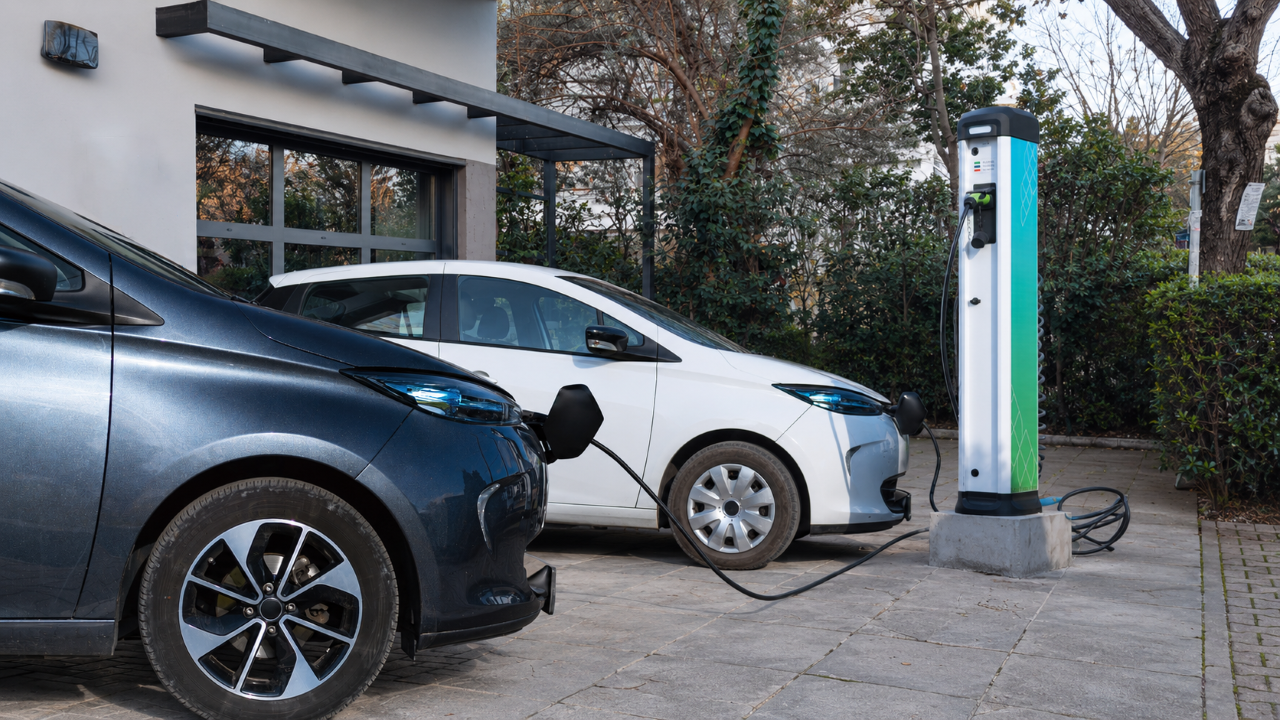
Two more provisions are routinely missed. Charging an electric company vehicle free of charge at the employer’s premises is not treated as employment income for the employee. And under Article 22B, the cost of buying, installing and operating charging points is deductible increased by 50% when the points are publicly accessible, rising to 70% for businesses operating in island municipalities, and to 70% and 90% respectively where the electricity is fully covered by renewable Guarantees of Origin. Charging points reserved for staff attract a 30% uplift.
In other words, the charger you install to serve your own fleet is itself a tax-advantaged asset, and it can generate revenue from visitors at the same time.
One thing to watch
The zero-emission side of this framework has been stable. The hybrid side has not. Law 5313/2026 moves all hybrids to a flat 50% registration tax exemption from 1 January 2027, removing the more generous treatment that low-emission plug-ins enjoyed, and proposals to strip plug-in hybrids of the benefit-in-kind exemption were tabled during 2026. Battery electric vehicles were left untouched throughout.
If you are signing a four-year contract now, that asymmetry is worth pricing in.
Next step
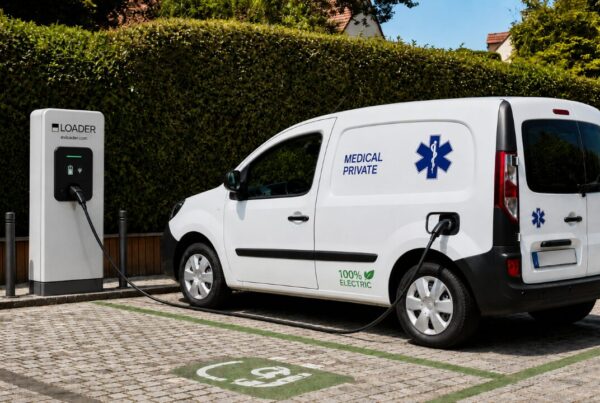
EV Loader supplies the charging hardware, installation and management platform behind Greek corporate fleets, including private authorisation for named drivers, consumption reporting per driver and per vehicle, and public charging when you want the same hardware to earn from visitors.
Talk to us about the charging side of your fleet plan before the leasing contracts are signed, not after.