Dynamic load balancing explained: static groups or a smart meter?
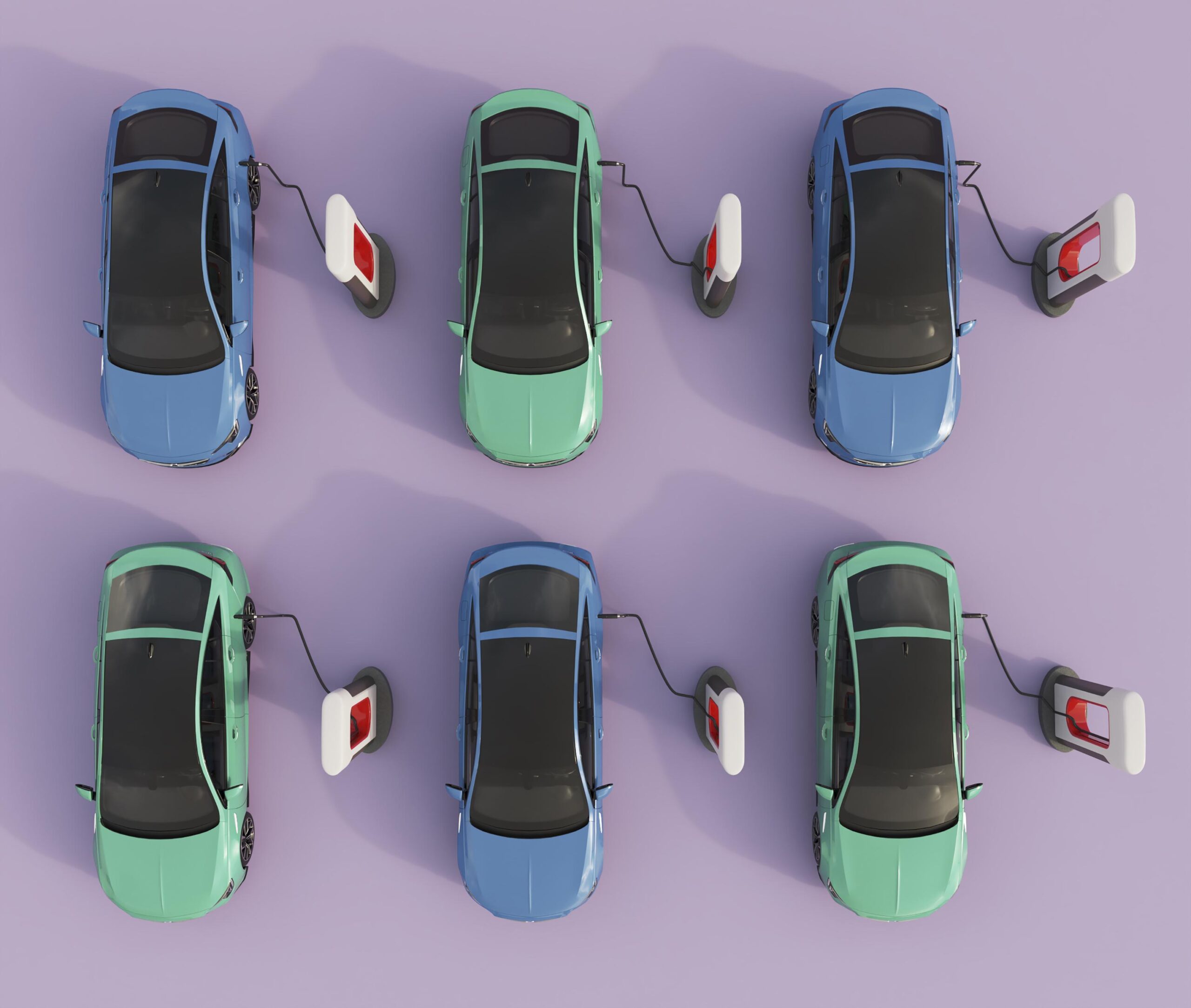
Load balancing lets several EV chargers share a limited electricity supply without tripping the main breaker and without paying for a bigger connection. There are two ways to do it. Static load balancing gives the chargers a fixed budget and shares it among the cars that are charging. Dynamic load balancing measures the whole building with a sensor or smart meter and gives the chargers whatever the building is not using at that moment. EV Loader covers both: static groups run on our platform, and dynamic balancing runs on chargers we supply and install with the right meter.
Why chargers need load balancing
A 22 kW charger draws 32 A on each of the three phases. Four of them charging at full power need 128 A per phase, far more than most hotels, offices or apartment buildings have to spare. Without balancing you are left with two poor options:
- Upgrade the supply with HEDNO (ΔΕΔΔΗΕ), which costs money and takes time.
- Cap every charger permanently at a low value, so a car charges slowly even when it is the only one plugged in.
Load balancing is the third option: every car charges as fast as the supply allows at that moment, and the total never goes over the limit.
Static load balancing: one budget shared by a group
With static balancing you decide how much current the chargers may use together, for example 40 A per phase, based on what your electrician says the installation can spare. That budget is then shared among the cars that are charging.
How EV Loader does it.
We set the chargers up as a group on the EV Loader platform. A group can include chargers of different brands, as long as they support OCPP smart charging, which most modern chargers do. We check every charger before it joins. The rules are simple:
- The current is shared among the cars charging, and the group never goes over its limit.
- Every car gets at least 6 A per phase, the lowest current the charging standard allows (about 4 kW on a three phase charger).
- If there is not enough room for one more car, it waits its turn in the order it plugged in, and the driver gets a notification that the car is waiting for shared power. It starts automatically when a car ahead of it finishes.
- Each charger keeps a safe limit stored on the charger itself, so the group stays within its budget even if the internet connection drops.
No extra hardware is needed.
Static groups suit car parks, hotels and offices where the chargers have their own supply line or where the rest of the building uses a predictable amount of power.
The limitation: the budget is fixed, so it has to be set for the busiest moment of the day. When the building uses little power, the chargers cannot use the spare capacity.
Dynamic load balancing: a meter that watches the whole building
With dynamic balancing, a current sensor or smart meter is installed at your main supply and measures what the whole building draws, in real time. The chargers get the capacity of the supply minus what the building is using. When the air conditioning, a kitchen or a lift switches on, the chargers slow down automatically; when those loads switch off, the chargers speed up again.
For example, a building with a 63 A per phase supply that uses 15 A at night can give its chargers most of the rest. At midday, with the air conditioning running at 45 A, the chargers drop to what is left, and the main breaker never trips.
How EV Loader does it.
Dynamic balancing runs on the charger itself, with a sensor or meter that our installers fit at your electrical panel. Chargers in our e-shop that support it:
- Dahua D-Volt with the single phase DLB sensor or the three phase DLB sensor
- V2C Trydan Pro, which comes with the V2C ControlBox meter and can also follow your solar production
- Hager Witty Share, with dynamic load management built in
- Livoltek BUSH 2×22 kW, a public charger with smart meters and load balancing
The chargers stay connected to the EV Loader platform for payments, access and reports, and we configure the platform so that it never works against the charger’s own balancing.
Best for: homes and small businesses with a limited supply, buildings with large loads that come and go, and sites with solar panels. The limitation: it needs a sensor at the main panel, and the balancing usually works among chargers of the same brand.
Static or dynamic: which one fits your site?
| Static group (EV Loader platform) | Dynamic with a smart meter | |
|---|---|---|
| What sets the limit | A fixed budget you choose | The live consumption of the building |
| Extra hardware | None | A current sensor or meter at the main panel |
| Mixed charger brands | Yes, any OCPP charger with smart charging | Usually one brand |
| Uses spare capacity | No, the budget stays the same all day | Yes, chargers speed up when the building uses less |
| Best for | Car parks, hotels, offices, chargers on their own supply line | Homes, small businesses, buildings with variable loads or solar |
Larger sites often use both: dynamic balancing on the chargers that share the building’s main supply, and a static group for chargers on a dedicated line in the car park. We design the setup so the two never compete.
Quick answers
Does load balancing make charging slower?
Only when several cars charge at the same time and the supply is the limit. A car charging on its own gets the full speed the supply allows.
What is the minimum a car gets?
6 A per phase. Below that the charging standard does not let a car charge, which is why a car waits its turn instead of charging at an unusable trickle.
Do I need to upgrade my supply with HEDNO?
Often not. Load balancing lets you add chargers within the supply you already have. An electrician’s study of your installation confirms how much capacity the chargers can safely use.
What about DC fast chargers?
Groups cover AC chargers today. A DC charger can be given a fixed power limit in kW from the EV Loader platform.
Get a load balancing plan for your site
Tell us about your electricity supply and how many chargers you want, and we will propose static balancing, dynamic balancing or both, the right hardware and a cost estimate. Request a quote for your business.
Already know what you need? Browse the AC chargers in our e-shop.